
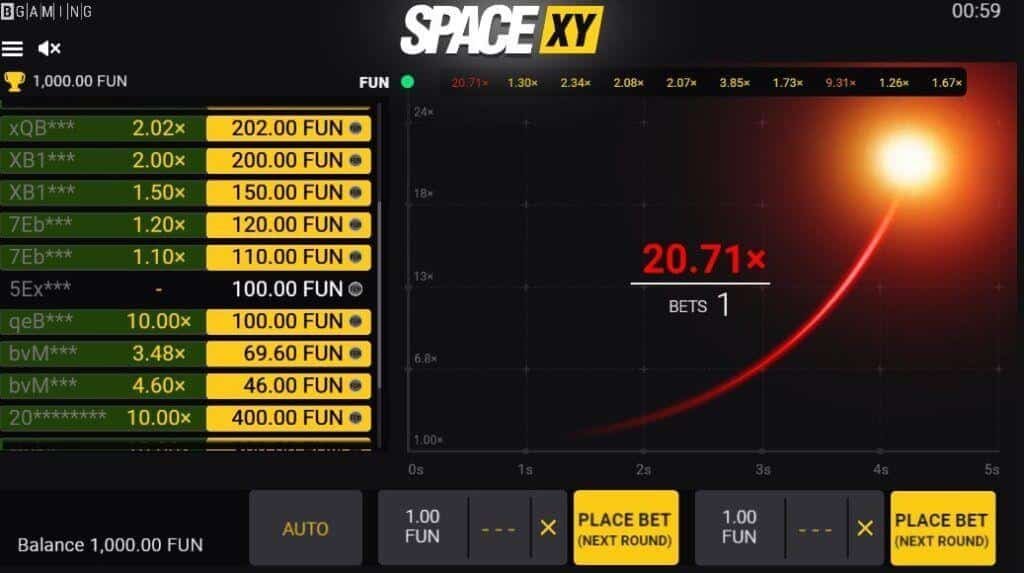
This guide looks at real tools and strategies that can transform how you play Login To Space Xy Game XY. We will cover specific risk assessment methods, bankroll calculators, and ways to review your play. The goal is to give you a straightforward path for handling your time, comprehending a game’s volatility, and making decisions based on more than just instinct. We won’t be addressing specific legal regions.
Comprehending Risk in Interactive Gaming
Risk is the fundamental element in any game combining luck and skill. For Space XY players, risk signifies the chance of losing your bet and how much you could lose. Because these games often enable your choices to affect the result, managing risk isn’t about avoiding it. It’s about evaluating it and managing it in a way that matches what you want from your session and what you’re okay with.
Every move you take in the game has a built-in trade-off between risk and potential reward. Getting a feel for this balance is where sustainable play commences. It aids you consider the long-term process instead of focusing on a single win or loss. With this basis, you can engage with the game’s mechanics in a more intentional way.
The Function of Bankroll Management Calculators
There is nothing more crucial for a player than controlling their bankroll. A bankroll calculator is a simple tool with a clear job: it indicates how much you should bet. Its main purpose is to stop you from burning through your funds too rapidly. You plug in your total available bankroll and the percentage you’re ready to wager on one round, and it delivers a clear betting limit.
Look at the “1-5% rule” as an example. In this case, you only bet a small slice of your total funds per round. A calculator does this math for you, removing emotion out of the equation. It’s wise to use one when you commence a session to set a clear boundary. This habit safeguards your money from quick depletion during a run of bad luck, making sure you can come back and play another time.
- Total Bankroll: The exact amount of money you’ve decided to risk over a set timeframe.
- Session Bankroll: A more limited piece of your total bankroll, earmarked for just one playing session.
- Stake Percentage: The part of your session bankroll you wager on a single game round.
- Loss Limit: A pre-set dollar amount where you agree to stop playing for that session.
Calculating Session Duration and Loss Limits
Session calculators aid you in planning your time and control your exposure. They account for how long an average round takes, your bet size, and your bankroll to estimate how long your session might last. Their real power is in enforcing a stop-loss limit. A stop-loss is a boundary, a specific amount of loss where you commit to walking away, no matter how you feel or whether you want to win your money back.
Many players note that a stop-loss set at 20% to 30% of their session bankroll works well. A calculator converts this from an idea into a number. You enter your session bankroll, and it tells you the exact dollar amount that represents your limit. This tool is essential for keeping a cool head and preventing a minor loss from blowing up into a problem.
Assessing Game Variance and RTP
Two metrics you need to understand are volatility and Return to Player (RTP). Volatility tells you how often and how large the wins are. High volatility games dispense less often, but the wins can be bigger, causing wild changes in your bankroll. Low volatility games deliver smaller amounts more frequently. Understanding a game’s volatility helps you pick one that suits your appetite for risk and the amount of your bankroll.
RTP is a calculated percentage. It indicates the portion of all money wagered that a game pays back to players over a very long period. It does not guarantee your next ten minutes of play. However, a greater RTP generally means the game’s built-in edge is smaller. Consider both numbers together. A high-volatility game with a high RTP requires a more substantial bankroll to endure quiet periods. A low-volatility game offers a more consistent, more expected experience.
Applying the Kelly Criterion for Bet Sizing
The Kelly Criterion is a mathematical formula. Its aim is to figure out the best bet size to expand your bankroll over the long run. In simple terms, it recommends how much to bet based on what you think your edge is. For games where you can calculate the odds, it offers a systematic, emotion-free way to set your bets, aiming to safeguard your money while aiming for growth.
Be warned, using the Kelly Criterion isn’t easy. It requires a clear-eyed view of your own edge. We mention it here as an sophisticated idea for players concentrating on strategy. A Kelly calculator requests your bankroll, your estimated chance of winning, and the payout odds. It then spits out a percentage of your bankroll to bet. Most conservative players use a “Fractional Kelly” approach, betting only half or a quarter of the recommended amount to reduce the risk.
Using Probability Simulators for Strategy Testing
Probability simulators are fantastic for training. They enable you to run thousands of virtual game rounds. You can try out different betting strategies and stake sizes without using real money. Watching the results lets you spot potential ups and downs and long-term patterns. This is notably useful for comprehending how different betting habits affect your funds.
Attempt using a simulator to evaluate your chosen money management plan. You could, for example, simulate what happens to a $100 bankroll over 1,000 rounds if you bet the same amount every time versus if you raise your bets after losses. The graphs and numbers you get provide a clear, data-heavy picture of risk. It’s a safe way to tweak your method before you play for real.
Emotion Monitoring and Choice Diaries
The fanciest calculator won’t assist if you struggle to manage your impulses. That’s why we suggest a basic, non-digital tool: a reflection log. Before you play, jot down your chosen plan, your stake, your cutoff, and how you’re emotionally. Afterward, record what actually occurred and if you departed from your strategy.
This exercise builds self-knowledge. It helps you recognize what triggers bad choices, like raising your bets after a defeat or betting when you’re drained. Over many sessions, your log turns into a tailored risk assessment tool. It exposes patterns in your behavior that mathematics alone can’t show. It links the theory of controlled betting to the truth of your own actions.
Combining Tools for a Holistic Risk Framework
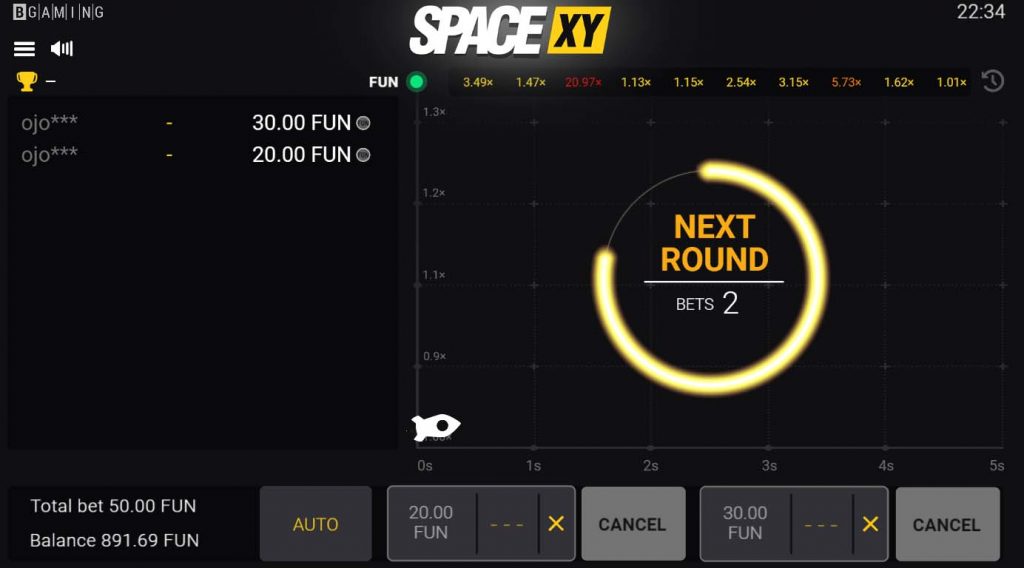
Good risk management doesn’t mean using one tool. It involves building your own system. Commence with a bankroll calculator to set your bet size. Employ a session calculator to lock in your time and loss limits. Check a game’s volatility to see if your bankroll is a good match. Every now and then, fire up a simulator to try out a new idea.
And keep up with your decision journal to check your own discipline. This combined approach transforms vague ideas into a solid, repeatable routine. The strength of this system is in its structure. It removes the guesswork and emotion out of big choices. It enables you to focus on the game’s strategy and your own enjoyment, not on panicked money decisions.

Keeping Discipline with Automatic Limits
The final step is applying these calculations into practice using concrete, enforceable limits. Many gaming platforms offer tools for establishing deposit limits, loss limits, and session time limits. Our strong advice is to use them. They streamline the boundaries you determined when you were thinking clearly. They work as a safety net, binding you to the rational decisions you made before you started playing.
Discipline is a muscle that becomes tired. Automated tools don’t get tired or emotional. Setting a deposit limit that matches your monthly bankroll and a session loss limit enables you to hand off your risk management. This is the ultimate, essential piece of a responsible strategy. It guarantees the careful planning you did isn’t wrecked by a momentary lapse.
We’ve walked through a set of practical tools. These range from bankroll calculators and volatility checks to emotional journals and automated limits. Together, they enable you to approach Space XY with a systematic, analytical headspace. Integrating these methods into your routine creates a personal framework for handling risk. It shifts the emphasis from pure luck to calculated participation. This type of disciplined approach is crucial for enjoying the game over the long term and making choices you can feel good about.
